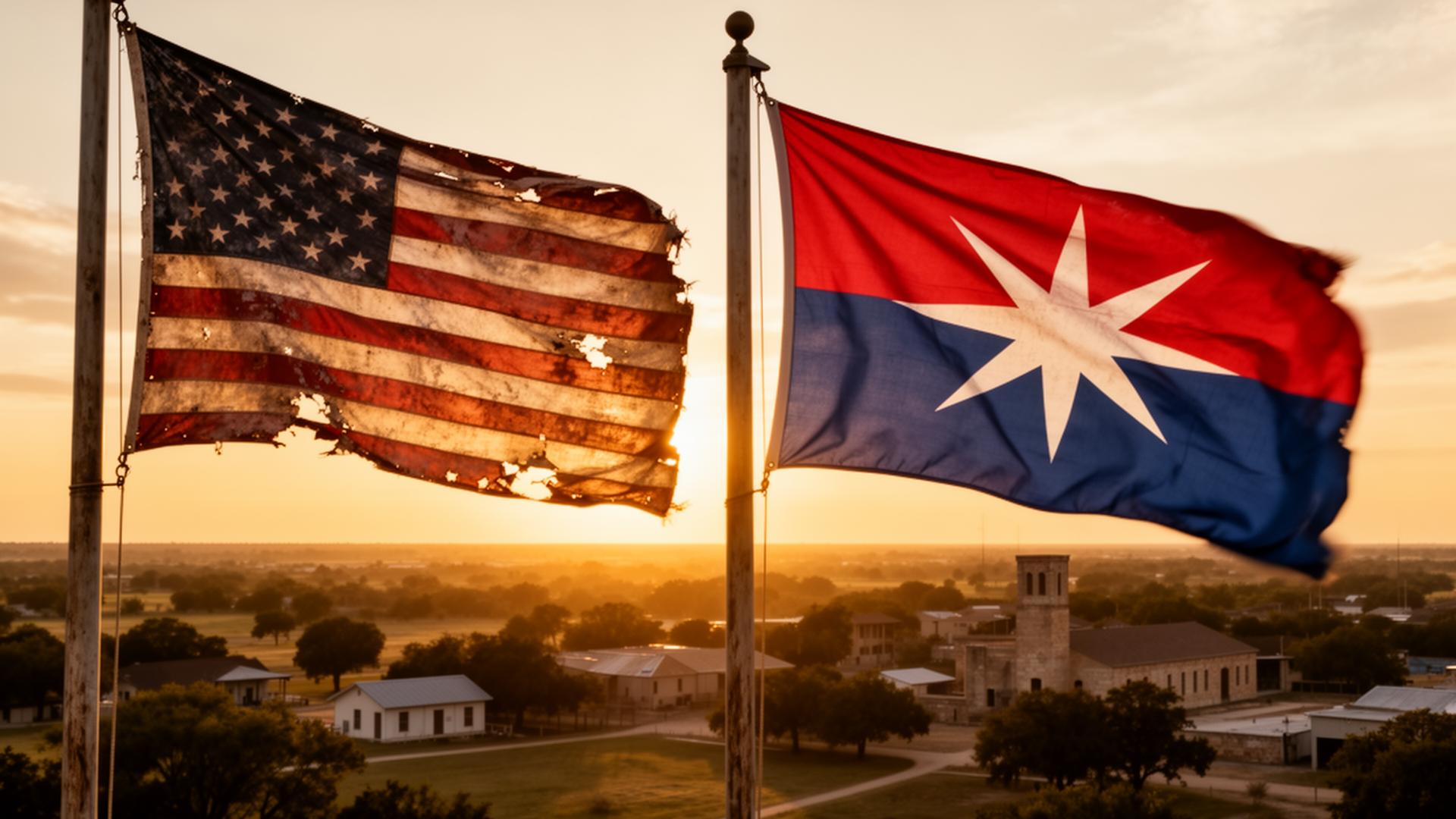
Every year on June 19, Americans gather to commemorate one of the most consequential moments in the nation's history: the day that the last enslaved people in the Confederacy learned, by federal order, that they were free. Juneteenth — a contraction of "June" and "nineteenth" — is both a celebration and a remembrance. It is a national holiday, an American story, and, for many descendants of formerly enslaved Black Americans, a deeply personal ancestral observance.
This article approaches Juneteenth from a historical and cultural perspective. It explains what happened in Galveston, Texas on that June day in 1865, who the Freedmen were, and why so many Black Americans who identify as Freedmen or Foundational Black Americans view Juneteenth as a uniquely ancestral holiday — while also acknowledging the broader American audience that now joins in observing it.
Section 1: The History of Juneteenth
Juneteenth marks a specific date — June 19, 1865 — but its meaning is rooted in a longer arc of war, law, and federal enforcement. To understand the day, it helps to trace the events that led to it.
The Civil War and the Question of Slavery
The American Civil War (1861–1865) was fought between the United States and eleven Southern states that had seceded to form the Confederate States of America. The states that seceded explicitly named the preservation and expansion of slavery as central to their cause. Their published declarations of secession — Mississippi, South Carolina, Georgia, and Texas among them — left little ambiguity on the matter.
The Emancipation Proclamation
On January 1, 1863, President Abraham Lincoln issued the Emancipation Proclamation, declaring that "all persons held as slaves" within the rebelling states "are, and henceforward shall be free." The Proclamation was, at the time, a wartime executive order. Its practical reach depended on the advance of the Union Army: in areas the United States did not yet control, enslavers continued to enforce bondage.
Texas — geographically remote, with comparatively few Union troops — became one of the last strongholds where slavery continued in practice. Enslavers from other Confederate states had even moved enslaved people to Texas during the war to keep them beyond the reach of advancing federal forces.
June 19, 1865: General Granger Arrives in Galveston
On June 19, 1865 — more than two months after Confederate General Robert E. Lee's surrender at Appomattox — Major General Gordon Granger arrived at Galveston, Texas, with roughly 2,000 federal troops. From his headquarters in Galveston, Granger issued General Order No. 3, which read in part:
"The people of Texas are informed that, in accordance with a proclamation from the Executive of the United States, all slaves are free. This involves an absolute equality of personal rights and rights of property between former masters and slaves, and the connection heretofore existing between them becomes that between employer and hired labor."
The order was not the legal end of slavery in the United States — that came with the ratification of the Thirteenth Amendment on December 6, 1865, which abolished slavery and involuntary servitude nationwide except as punishment for a crime. But for the roughly 250,000 enslaved people in Texas, June 19, 1865 was the day federal authority arrived to enforce freedom. That enforcement is why the date became sacred.
A Brief Timeline
- April 12, 1861 — Confederate forces fire on Fort Sumter; Civil War begins.
- January 1, 1863 — Lincoln issues the Emancipation Proclamation.
- April 9, 1865 — General Lee surrenders at Appomattox Court House.
- June 19, 1865 — Granger reads General Order No. 3 in Galveston.
- December 6, 1865 — Thirteenth Amendment is ratified.
- July 9, 1868 — Fourteenth Amendment establishes birthright citizenship.
- February 3, 1870 — Fifteenth Amendment prohibits race-based denial of the vote.
- June 17, 2021 — President Biden signs the Juneteenth National Independence Day Act.
Section 2: Who Were the Freedmen?
The term Freedmen (used in the period to include women and children as well) referred to the formerly enslaved Black Americans who, by emancipation, became free people. The word was not an informal description — it was the language of federal law. In March 1865, Congress established the Bureau of Refugees, Freedmen, and Abandoned Lands, universally known as the Freedmen's Bureau, to oversee the transition from slavery to freedom. The Bureau's records — marriage registers, labor contracts, school rolls, hospital ledgers — remain one of the most important archives of nineteenth- century Black American life.
Reconstruction and the Project of Citizenship
The years immediately after the Civil War, known as Reconstruction (roughly 1865–1877), were a period in which the United States attempted, for the first time, to build a multiracial democracy. Freedmen ran for and won public office, founded schools and churches, purchased land, and registered voters. Three constitutional amendments — the Thirteenth, Fourteenth, and Fifteenth — rewrote the legal definition of American citizenship.
The era was also met with violent resistance, paramilitary terror, and, eventually, the federal withdrawal of Reconstruction protections. The unfinished work of that period is a recurring theme in BlackCheck's coverage of the Freedmen story.
Terminology Today
Modern descendants of formerly enslaved Black Americans use a range of self-identifying terms. The choice often reflects how a person understands their family's history and civic lineage rather than any single agreed-upon label. Common terms include:
- Black American — the broadest and most widely used identifier.
- American Descendants of Slavery (ADOS) — emphasizes lineage from people enslaved in the United States.
- Foundational Black American (FBA) — emphasizes the role of this community in the founding and building of the United States.
- Freedmen / Freedmen Descendants — invokes the legal and historical category of the people emancipated by the Civil War.
Terminology varies between individuals, families, and organizations. BlackCheck presents these terms factually and without preference. What they share is a reference to the descendants of formerly enslaved Black Americans whose families helped build the United States through generations of labor, military service, entrepreneurship, civic organizing, scholarship, and artistic contribution.
Section 3: Why Juneteenth Holds Special Meaning
For many Freedmen and Foundational Black Americans, Juneteenth is not a generalized celebration of liberty — it commemorates a specific historical event involving a specific community of people. That specificity is part of what gives the holiday its weight.
Within that frame, Juneteenth is often described as:
- A celebration of freedom — the moment federal authority arrived to enforce the end of chattel slavery on the last large population still held in bondage.
- A remembrance of ancestors — the people who survived enslavement and built families, churches, schools, and businesses in the years that followed.
- A recognition of survival — a deliberate honoring of those who endured one of the country's longest-running systems of forced labor.
- A recognition of perseverance — the long Reconstruction-era and post-Reconstruction work of building institutions under hostile conditions.
- A celebration of citizenship and belonging — a reminder that this community's claim on the United States is not partial but foundational.
From this perspective, Juneteenth is an ancestral holiday: a date passed down across generations, first observed in Texas Freedmen communities in the years immediately following 1865 and carried outward by migration over the following century.
Section 4: An American Story
Juneteenth is also, without contradiction, an American story. It is tied to the Civil War, the Constitution, and the federal government's decision to enforce a national policy of emancipation. The same period produced the Reconstruction Amendments, the foundational federal civil rights statutes, and the legal framework of birthright citizenship that continues to shape American identity today.
Viewed in that light, Juneteenth commemorates not only the end of slavery for a specific community but also a turning point in what the United States understood itself to be. The Fourteenth Amendment's guarantee that "all persons born or naturalized in the United States, and subject to the jurisdiction thereof, are citizens of the United States" cannot be told apart from the events of 1863–1870. Juneteenth sits at the heart of that transformation.
This is why many people describe Juneteenth as a uniquely American holiday tied to a uniquely American experience. It belongs to a specific community by lineage and to the country as a whole by history.
Section 5: Everyone Is Welcome to Celebrate
On June 17, 2021, President Joe Biden signed the Juneteenth National Independence Day Act, making June 19 the eleventh federal holiday in the United States. The bill passed the Senate unanimously and the House by an overwhelming bipartisan vote. The national recognition formalized an observance that had already existed in Texas for more than 150 years and across the country for generations.
Today, Juneteenth is marked by parades, family cookouts, church services, museum programs, scholarly lectures, art exhibits, and community festivals. People of every background participate. Educators teach the history in classrooms; cities host public readings of General Order No. 3; families gather around traditional foods, including the red drinks and red foods that carry their own layered cultural meaning.
Many in the Freedmen and Foundational Black American community welcome that broader participation while encouraging one thing in return: that those who celebrate also learn the history. Honoring the original meaning of the day — and the specific community whose freedom is being commemorated — is part of what makes Juneteenth more than a calendar date.
Section 6: Symbols, Flags, and Representation
Juneteenth has its own visual language, and its symbolism is worth understanding.
The Juneteenth Flag
The official Juneteenth flag was designed in 1997 by activist Ben Haith, founder of the National Juneteenth Celebration Foundation, and refined into its current form in 2000 with illustrator Lisa Jeanne Graf. The date "June 19, 1865" was added in 2007. The flag's elements are deliberately and unmistakably American:
- Red, white, and blue — the colors of the United States flag, signaling that the people commemorated by Juneteenth are Americans, and that the freedom commemorated is American freedom.
- The bursting star — represents Texas, the place where federal enforcement of emancipation reached the last large enslaved population, and, more broadly, the spread of freedom across all fifty states.
- The arc — symbolizes a new horizon: opportunities and possibilities ahead for the formerly enslaved and their descendants.
Many Freedmen and Foundational Black Americans observe that the flag's red, white, and blue is not incidental. From their perspective, Juneteenth commemorates an American historical experience — the enforcement of an American emancipation by an American army under an American constitution — and so the American color palette is the one they believe best fits the occasion. They also recognize that other communities may choose different colors to express their own traditions, and they welcome that: the holiday's American meaning is not diminished when others mark it in their own way. But the essential point is this: Juneteenth is an American holiday that commemorates American Freedmen, and its observance is most faithful when it remains centered on that purpose. Just as Memorial Day is not treated as something else, neither should Juneteenth.
Section 7: The Legacy of Juneteenth Today
Juneteenth's modern legacy is layered. It is at once:
- A federally recognized holiday — observed by the U.S. government, every state in some form, and most major employers.
- An educational moment — used by schools, museums, libraries, and historical societies to teach the history of slavery, emancipation, and Reconstruction.
- A family tradition — passed down in Black American households, particularly those with deep Texas roots, but increasingly nationwide.
- A community celebration — anchored by churches, civic organizations, HBCUs, and neighborhood groups.
- A historical preservation project — supporting the maintenance of Freedmen's Bureau records, Freedmen's Town landmarks, family genealogies, and oral histories.
The throughline across all of these is connection: Juneteenth links modern generations to the specific ancestors whose freedom it commemorates, and to the country whose laws were changed to secure that freedom.
Conclusion
Juneteenth is both a celebration of freedom and a remembrance of a specific historical community. It marks the day a federal officer stood in Galveston and read an order that turned the Emancipation Proclamation into enforced reality for a quarter-million people. It honors the Freedmen who, in the years that followed, rebuilt their lives, founded institutions, and laid claim to the full meaning of American citizenship.
For many who identify as Freedmen or Foundational Black Americans, Juneteenth is the ancestral holiday: the day their family's freedom was secured by the United States, on American soil, under the American flag. They invite others to learn that history and to observe the day with them — not by adopting that lineage, but by understanding it.
That is how the meaning of Juneteenth is preserved: by telling the story accurately, honoring the people it commemorates, and welcoming every American who wants to learn it.
Selected References and Further Reading
- Emancipation Proclamation, January 1, 1863 — U.S. National Archives.
- General Order No. 3, Major General Gordon Granger, June 19, 1865 — Records of the U.S. Army Continental Commands, National Archives.
- Thirteenth, Fourteenth, and Fifteenth Amendments to the U.S. Constitution.
- Records of the Bureau of Refugees, Freedmen, and Abandoned Lands (Record Group 105) — National Archives.
- Juneteenth National Independence Day Act, Public Law 117-17 (2021).
- Eric Foner, Reconstruction: America's Unfinished Revolution, 1863–1877 (Harper & Row, 1988).
- Annette Gordon-Reed, On Juneteenth (Liveright, 2021).
- National Juneteenth Observance Foundation — flag history and symbolism.
- Smithsonian National Museum of African American History and Culture — Juneteenth educational resources.
Editorial note: This article distinguishes historical facts (dates, documents, legislation) from modern perspectives and self-identifying terminology used within the Freedmen and Foundational Black American community. Corrections, if any, will be appended publicly below.
Share this article
Editorial standards: BlackCheck distinguishes verified facts, attributed claims, and open questions. Corrections are appended publicly to each piece.